A trainer built on grit and instinct
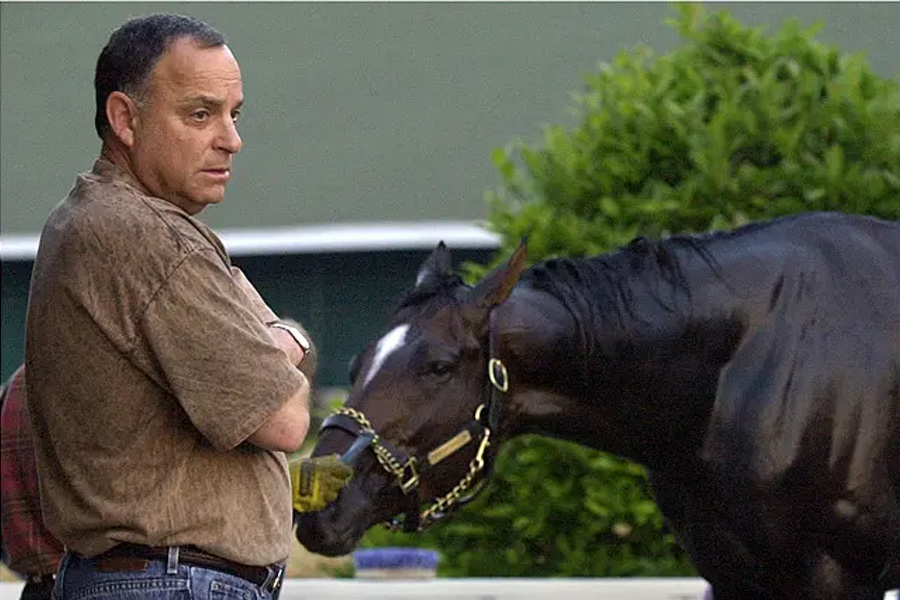
When I picture Robert J. Frankel, I see a kid from Brooklyn chasing the pulse of the racetrack like a heat-seeking compass. He was often called Bobby, but he moved through the sport with the steady, unmistakable presence of Robert. That early curiosity began on family outings to Belmont Park, then hardened into a vocation that would redefine modern training. He tried college, left after a fight, and patched together a life of construction work by day and trackside gambling by night. To get close to the horses, he volunteered as a hot walker for free admission. That proximity changed him. He learned to read a horse the way a violinist reads a score, by subtle tension and breath.
By 1966 he held a trainer’s license and scratched out wins on cold mornings and crowded cards. It wasn’t glamorous. It was practical, relentless, and alive with possibility. Those early years taught him a language that did not require loud declarations, only quiet decisions. Over four decades he turned intuition into method, method into mastery, until his name defined a standard few could match.
From Brooklyn tracks to California heights
I trace his ascent through the New York shedrows to his decisive 1972 move to California. There, his genius for spotting undervalued horses exploded. He built momentum with claimers that he could improve with targeted care and precise placement. A record spring meet at Hollywood Park, with dozens of wins for owner Edmund Gann, announced a trainer who could make bargains behave like blue chips.
California suited his temperament. Turf, pace, distance, recovery. He threaded those factors like a chess player who was always two moves ahead. The barn became his laboratory. The clock was his metronome. And the horses, well, they told him everything he needed to know.
Master of champions and records
Robert J. Frankel collected numbers that tell a stern, elegant truth. He won 3,654 races and his stable earned more than 227 million dollars in purses. He secured five Eclipse Awards for Outstanding Trainer, including four in a row in the early 2000s. In 2003 he set a single-season mark with 25 Grade I wins. His Hall of Fame induction arrived in 1995, and it felt like a rubber stamp on destiny.
Champions followed. Ghostzapper gave him the 2004 Breeders’ Cup Classic and Horse of the Year. Ginger Punch delivered the 2007 Breeders’ Cup Distaff. Empire Maker carried him to the Belmont Stakes in 2003, a victory that rewrote the ending of that year’s Triple Crown story. He trained turf stars and sprinters, iron horses and fragile meteors. He won meet titles in bunches at Santa Anita and Hollywood Park. When I think of the breadth of it, I see a constellation of Grade I placings pulsing across two coasts and multiple eras.
The man beyond the shedrow
He could be gruff with people and gentle with horses. That juxtaposition made sense to me. Horses asked for clarity, not charm. He prioritized recovery, acclimation, and fit, rarely chasing hype. He was private about illness and wore the armor of secrecy like an old coat, familiar and necessary. Colleagues talk about his selective openness, how he let in a small circle and gave it everything he had. He died in 2009, at 68, with leukemia, and the sport felt like it had lost a northern star.
Family threads: Bethenny, Bernadette, John, and Bonita
The family side of Robert’s story is complicated. In 1970 he married Bernadette Birk, who converted to Judaism for the union. Their daughter, Bethenny Frankel, would become a household name through television, bestselling books, and the Skinnygirl brand, with a widely cited net worth in the tens of millions. Bethenny has spoken about a turbulent childhood and an absent father. She lived much of her youth with her mother after the divorce in 1974 and later with her mother’s second husband, John Parisella, a trainer who had been Robert’s friend and competitor. She has described instability and pain in those years. The adults later found some measure of peace. Parisella reconciled with Robert before Robert’s passing, and Bethenny did too, managing late-life visits that softened old edges.
Robert married again in 2003, to Bonita Boniface. That marriage ended in 2006, and Bonita kept a low profile. No other children are publicly documented. His parents, Merrill and Gertrude, ran a catering business and were part of the Brooklyn backbone from which Robert drew both stubbornness and resilience. He was buried at Hillside Memorial Park in Culver City, a quiet place for a man who spent his life amid clattering grandstands and thundering hooves.
Legacy in motion
Legacies can wither if they are not tended. Robert’s has blossomed. The annual Robert J. Frankel Stakes at Santa Anita keeps his name in the race day program and in the memory of fans who recall his love of turf and stamina. The race has seen favored runners and surprise winners. Angel Nadeshiko scored in 2023 at long odds. Mrs. Astor followed in 2024. Weather even forced a postponement at one point, a reminder that racing lives at the intersection of ritual and risk.
I see his influence in training rhythms that value rest and rhythm over rush. In how barns manage shipping and spacing. In the expectation that a horse can climb a class ladder with smart placement and patient hands. He taught a generation of horsemen that improvement is not a miracle, it is a plan.
Timeline highlights
- Born in Brooklyn, 1941, into a family business far from any paddock.
- Learned the racetrack’s mechanics as a hot walker. Assisted seasoned trainers in New York.
- Licensed in 1966. Early wins at Aqueduct. A gritty apprenticeship in results.
- Moved permanently to California in 1972. Built momentum with claimers and sharp placement.
- Hall of Fame induction in 1995. National titles and global respect.
- A historic 2003 season with 25 Grade I wins, plus the Belmont with Empire Maker.
- Breeders’ Cup triumphs including the 2004 Classic with Ghostzapper and the 2007 Distaff with Ginger Punch.
- Died in 2009, leaving a blueprint that many still follow.
Money, myth, and what truly matters
Exact net worth figures are elusive. Trainers earn a percentage of purses, typically around ten percent, and sometimes share in ownership. When a stable banks more than 227 million dollars, you can infer he did very well. Yet he didn’t trade in boast or flash. The myth around his fortune is a whisper compared to the roar of his record. He seemed more comfortable letting the numbers talk and the horses sing.
FAQ
Why was Robert J. Frankel so influential as a trainer?
He combined street-level pragmatism with elite precision. He spotted undervalued talent, placed horses where they could win, and insisted on recovery and conditioning. His approach turned claimers into stakes horses and good horses into champions.
What are his most notable career achievements?
Five Eclipse Awards, a Hall of Fame induction, 3,654 wins, and a landmark 2003 season with 25 Grade I victories. Signature wins include the 2003 Belmont Stakes with Empire Maker and the 2004 Breeders’ Cup Classic with Ghostzapper, who was named Horse of the Year.
How did his personality shape his work?
He was private, sometimes brusque, and deeply focused. That persona gave him the discipline to guard his barn’s routine and protect his horses from unnecessary stress. With horses he was sensitive and exacting, reading their cues with a quiet intensity.
What is known about his relationship with Bethenny Frankel?
It was strained for years, shaped by divorce and distance. Bethenny has shared difficult memories from her childhood. They reconciled late in his life, which gave them a small window for reconnecting before he passed.
Who were the key family members in his life?
His first wife, Bernadette Birk, is Bethenny’s mother. Bethenny later lived with Bernadette and her second husband, trainer John Parisella. Robert’s second marriage was to Bonita Boniface. His parents were Merrill and Gertrude, who ran a catering business in Brooklyn.
What is the Robert J. Frankel Stakes?
A Grade 3 turf race for fillies and mares at Santa Anita Park that honors his name and contributions to the sport. Recent editions have produced both expected outcomes and upsets, keeping the race lively and relevant.
Is there a confirmed figure for his net worth?
No confirmed public figure exists. His earnings as a trainer, combined with occasional ownership interests, suggest substantial wealth. Trainers typically receive a percentage of purse earnings, and his stable earned more than 227 million dollars over his career.