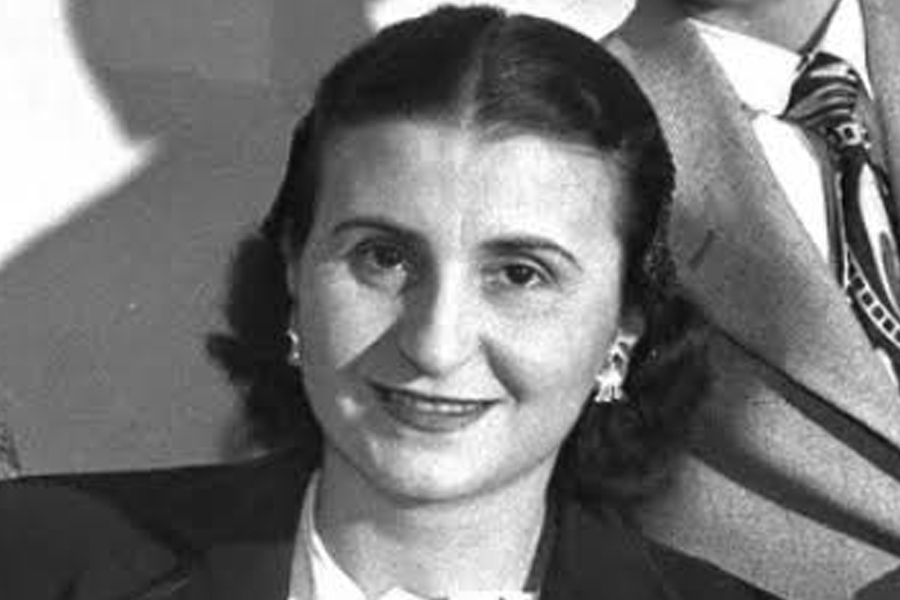
Basic Information
| Detail | Information |
|---|---|
| Full name | Anunciata M. Lombardi D’Alesandro |
| Also known as | Annunciata Lombardi, Nancy D’Alesandro, Big Nancy |
| Born | March 25, 1909 |
| Birthplace | Fornelli, Italy |
| Died | April 3, 1995 |
| Age at death | 86 |
| Parents | Nicola Lombardi and Concetta Milio Lombardi |
| Spouse | Thomas Ludwig John D’Alesandro Jr. |
| Marriage | September 30, 1928 |
| Children | Seven |
| Daughter | Nancy Patricia D’Alesandro Pelosi |
| Political role | Organizer, strategist, civic activist |
| Community base | Baltimore’s Little Italy |
| Notable legacy | Baltimore Democratic women’s organizing and constituent service |
| Burial | New Cathedral Cemetery, Baltimore |
Early Life in Italy and Baltimore
When I look at Anunciata D’Alesandro’s story, I see a life that began far from the marble halls of Washington and city government. She was born Annunciata Lombardi on March 25, 1909, in Fornelli, a town in what is now the province of Isernia in Molise, Italy. As a child, she immigrated to the United States with her parents, Nicola Lombardi and Concetta Milio Lombardi.
Baltimore became her real stage.
The Lombardi family settled in Little Italy, a neighborhood where language, church, family, food, and politics could overlap almost seamlessly. Anunciata spoke fluent Italian, a skill that later became much more than a family connection. It helped her communicate with immigrant residents who might otherwise have found political institutions distant or intimidating.
She attended the Institute of Notre Dame, a Catholic school in Baltimore, and developed an unusually energetic professional life for a young woman of her era. In the early 1920s, she worked as an auctioneer for A. J. Billig and Co. That detail alone makes her biography feel almost cinematic. Long before she became known as the formidable woman behind a political family, she was already working in a field that was hardly conventional for women.
She also briefly attended the University of Maryland Law School. Her legal studies were interrupted after the death of a young son, a personal tragedy that left an unmistakable mark on her life.
Marriage to Thomas D’Alesandro Jr.
On September 30, 1928, Anunciata married Thomas Ludwig John D’Alesandro Jr., known to family and political associates as Tommy or Big Tommy. He was born in Baltimore on August 1, 1903, and would eventually become a Maryland legislator, U.S. congressman, and mayor of Baltimore.
Their marriage lasted nearly 59 years.
Together, they built a household that became much more than a private family residence. Their Little Italy home became a place where neighbors came for help, politicians came to organize, and women gathered to discuss campaigns and community problems.
Thomas D’Alesandro Jr. served in the Maryland House of Delegates before winning election to the U.S. House of Representatives, where he served from 1939 to 1947. In 1947, he became mayor of Baltimore and remained in office until 1959.
Yet the political story of the D’Alesandro household cannot be understood by looking only at the man whose name appeared on the ballot.
Anunciata was doing the work behind the curtain.
The Woman Behind the Political Machine
Anunciata never held elected office herself, but describing her merely as a politician’s wife misses the heart of her influence.
She handled constituent problems, organized women, gathered neighborhood information, supported campaigns, and helped residents navigate everything from housing difficulties to medical needs and employment. Her home became a practical extension of the political office.
During the Depression, she reportedly kept a pot of stew available for people who needed food. Her telephone became legendary. A 1948 description characterized it as one of the hardest numbers in Baltimore to get through to, a fitting image for a woman whose network seemed to stretch in every direction.
She was described as a “one-woman social service agency.”
That phrase captures something important. Her politics were not confined to election day. They were personal, immediate, and deeply local. Someone needed help finding housing? She knew someone. Someone needed employment? She made calls. An immigrant family needed assistance? Her Italian could open the conversation.
Her approach was intensely hands-on.
The Baltimore Democratic Women’s Club and the Moccasin Army
The informal network known as Anunciata’s “moccasin army.” is colourful.
No official organization with membership cards or a constitution had the name. However, it described the neighbourhood ladies around Anunciata and the Baltimore Democratic ladies’s Club.
She raised the club’s political influence from the basement of the family rowhouse at 245 Albemarle Street in Little Italy.
I see that basement as a political command center, but with more family kitchen than boardroom. Women may organise, call, write, create campaign materials, discuss neighbourhood intelligence, and organise events. Ravioli and lasagna meals were social and political.
The surgery might be fast. Family memories mention Anunciata gathering 20–30 ladies in 15 minutes for action. Activities might flow into adjacent St. Leo’s Church for greater endeavours.
Women did more than campaign.
They heard.
Neighbourhood chats may show who is dependable, which families need help, where unhappiness is developing, and who may support a candidate. An informal information system was integrated into communal life.
In later life, Thomas D’Alesandro III called his mother the “true politician of the family.” Her daughter Nancy Pelosi said she taught political organization, constituent service, and feminism before it was popular.
A Powerful Advocate for Housing
Anunciata’s civic activism also extended into housing.
In 1951, she spoke to the Baltimore Council of Jewish Women about the importance of stable homes for families. Her argument connected housing directly to children, community life, faith, and social stability.
Her philosophy was straightforward: when families lacked decent homes, the consequences spread outward.
This was characteristic of her approach. She did not treat social problems as abstract policy questions. She encountered them through individual people who walked through her door, telephoned her home, or appeared through neighborhood connections.
Her work with organizations including the YWCA, American Red Cross Home Nursing Association, Salvation Army, Catholic institutions, and Democratic women’s groups reflected that same practical instinct.
She also reportedly patented a device for applying steam to the face, adding an unexpected entrepreneurial detail to a biography already filled with unusual accomplishments.
The D’Alesandro Children
Anunciata and Thomas had seven children, although public genealogical accounts vary because one child died young.
| Child | Birth and death | Known for |
|---|---|---|
| Thomas D’Alesandro III | July 24, 1929 to October 20, 2019 | Attorney, veteran, Baltimore mayor |
| Nicholas M. D’Alesandro | 1930 to 1934 | Died in childhood |
| Franklin Delano Roosevelt D’Alesandro | 1933 to 2007 | U.S. Army veteran |
| Hector Joseph D’Alesandro | 1935 to 1995 | Member of the D’Alesandro family |
| Joseph Thomas D’Alesandro | 1937 to 2004 | Member of the D’Alesandro family |
| Nancy Patricia D’Alesandro Pelosi | Born March 26, 1940 | U.S. representative and Speaker of the House |
The family was large, close-knit, and intensely connected to Baltimore politics.
Thomas III became mayor of Baltimore from 1967 to 1971. His administration unfolded during one of the city’s most turbulent periods, including the 1968 riots following the assassination of Martin Luther King Jr.
His political career gave Baltimore something remarkable: a mother and son who each became central figures in the city’s political life, with Thomas Jr. having previously served as mayor.
Nancy Pelosi and Her Mother’s Influence
The youngest child, Nancy Patricia D’Alesandro Pelosi, carried the family political tradition onto the national stage.
Born on March 26, 1940, Nancy grew up surrounded by political conversations, neighborhood organizing, campaign activity, and constituent service. Her mother’s influence was not theoretical. Nancy saw politics happening in the basement, on the telephone, around the dinner table, and at the front door.
That upbringing became part of Pelosi’s political identity.
Nancy Pelosi later served for decades in the U.S. House of Representatives and became the first woman to serve as Speaker of the House. She held the speakership from 2007 to 2011 and again from 2019 to 2023.
For Pelosi, her mother represented a model of political power that did not depend on an official title.
Anunciata showed her that organizing was about people. It was about knowing names, remembering problems, answering the telephone, building relationships, and getting neighbors to participate.
Pelosi has also spoken of her mother’s unfinished legal education, describing the influence of that interrupted dream on later generations of the family.
Grandchildren and the Next Generation
Anunciata’s family tree continued to expand through her children and grandchildren.
Among her better-known grandchildren are Christine Pelosi, Alexandra Pelosi, and Jacqueline Pelosi. Other descendants include great-grandchildren such as Paul Michael Vos.
Christine Pelosi has been particularly active in preserving memories of her grandmother. Her recollections have helped keep colorful details of the “moccasin army,” Anunciata’s political energy, and her determination alive for another generation.
Family remembrance has often emphasized not simply that Anunciata was the mother of Nancy Pelosi, but that she was an important figure in her own right.
That distinction matters.
Her Life Beyond Politics
Politics was only one piece of Anunciata’s identity.
She was a wife, mother, poet, community organizer, Catholic, civic volunteer, entrepreneur, and advocate. Her published poetry reveals another side of a woman more commonly remembered through political anecdotes.
She also remained deeply connected to family traditions. Food, language, neighborhood relationships, and Catholic community life were not separate from her public work. They were the infrastructure of it.
Her style of influence was personal rather than institutional. She did not need a formal office to become indispensable.
Final Years and Death
Thomas D’Alesandro Jr. died on August 23, 1987, after nearly six decades of marriage to Anunciata.
Anunciata survived him by almost eight years.
She died on April 3, 1995, at the age of 86. Her death was attributed to congestive heart failure, and she was buried at New Cathedral Cemetery in Baltimore.
Her life ended, but the political family she helped build continued to grow.
Maryland Women’s Hall of Fame Recognition
Posthumously admitted into the Maryland Women’s Hall of Fame in 2026, Anunciata got one of her greatest honours.
Her daughter Nancy Pelosi talked tearfully about her mother’s impact at honour ceremonies.
The honour gave a woman whose greatest achievements typically occurred outside formal institutions an official historical spotlight.
Relationships gave Anunciata political power. Her office was often rowhouse. A room full of neighbourhood ladies may be her crew. Her information system may be a phone call or dinner chat.
Person by person, she gained influence.
Anunciata D’Alesandro Family Timeline
| Year | Event |
|---|---|
| 1909 | Anunciata Lombardi is born in Fornelli, Italy |
| 1910s | Immigrates to the United States and grows up in Baltimore |
| Early 1920s | Attends Institute of Notre Dame and works as an auctioneer |
| 1928 | Marries Thomas D’Alesandro Jr. |
| 1929 | Thomas D’Alesandro III is born |
| 1930 to 1934 | Nicholas D’Alesandro is born and dies in childhood |
| 1933 | Franklin D’Alesandro is born |
| 1935 | Hector D’Alesandro is born |
| 1937 | Joseph D’Alesandro is born |
| 1939 | Thomas Jr. begins service in the U.S. House |
| 1940 | Nancy Patricia D’Alesandro is born |
| 1947 to 1959 | Thomas Jr. serves as mayor and Anunciata becomes an exceptionally active First Lady |
| 1951 | Anunciata speaks publicly on housing and community welfare |
| 1967 to 1971 | Thomas D’Alesandro III serves as Baltimore mayor |
| 1987 | Thomas D’Alesandro Jr. dies |
| 1995 | Anunciata D’Alesandro dies at age 86 |
| 2026 | She is posthumously inducted into the Maryland Women’s Hall of Fame |
FAQ
Who was Anunciata D’Alesandro?
Anunciata M. Lombardi D’Alesandro was an Italian American political organizer, civic activist, poet, and Baltimore community leader. She was the wife of former Baltimore mayor Thomas D’Alesandro Jr. and the mother of former Baltimore mayor Thomas D’Alesandro III and former Speaker of the House Nancy Pelosi.
What was Anunciata D’Alesandro known for?
She was best known for grassroots political organizing, constituent services, women’s political activism, housing advocacy, and her role in the Baltimore Democratic Women’s Club. She became an influential behind-the-scenes force in her husband’s political career and her family’s wider political legacy.
What was the moccasin army?
The “moccasin army” was an informal name for the network of neighborhood women who worked with Anunciata D’Alesandro on political campaigns, community organizing, information gathering, and civic activities. It was not a formal organization with an official membership structure.
How many children did Anunciata D’Alesandro have?
Anunciata and Thomas D’Alesandro Jr. had seven children, although one son, Nicholas, died in childhood. Their surviving children included Thomas D’Alesandro III, Franklin, Hector, Joseph, and Nancy Pelosi.
Who was Anunciata D’Alesandro’s husband?
Her husband was Thomas Ludwig John D’Alesandro Jr., a Baltimore politician who served in the Maryland House of Delegates, the U.S. House of Representatives, and as mayor of Baltimore from 1947 to 1959.
Was Anunciata D’Alesandro Nancy Pelosi’s mother?
Yes. Anunciata was the mother of Nancy Patricia D’Alesandro Pelosi, who represented California in Congress for decades and became the first woman Speaker of the U.S. House of Representatives.
When did Anunciata D’Alesandro die?
Anunciata D’Alesandro died on April 3, 1995, at age 86. She was buried at New Cathedral Cemetery in Baltimore.
Why is Anunciata D’Alesandro important to Baltimore history?
Her importance comes from the unusual political network she built through women, immigrant communities, constituent service, and neighborhood organizing. Her influence helped shape the D’Alesandro political dynasty and provided a model of grassroots politics that strongly influenced her daughter Nancy Pelosi.
When was Anunciata D’Alesandro inducted into the Maryland Women’s Hall of Fame?
She was posthumously inducted into the Maryland Women’s Hall of Fame in 2026, decades after her death. The recognition highlighted her political organizing, civic work, and lasting influence on Maryland public life.